


Communication Equipment
The Business Development Center within the Research & Development Division will drive productization and commercialization alongside the Technology Development Center, which is responsible for strengthening platform technologies.
A filament winder is a device that automatically forms CFRP (Carbon Fiber Reinforced Plastics) and GFRP (Glass Fiber Reinforced Plastics) by winding carbon fiber or glass fiber. The demand for manufacturing equipment for forming lightweight, high-strength components—such as hydrogen tanks for fuel cell vehicles and other high-pressure vessels—has been expanding in recent years.
The most significant feature of our filament winder is its adoption of a multiple filament feeding system, unlike conventional single-spool systems. This has significantly improved productivity while enabling the production of molded parts with high design flexibility and superior durability.
Furthermore, we offer a lineup capable of handling everything from small-diameter tanks to large-diameter tanks, flexibly meeting diverse production needs for molded products.
The multiple filament feeding system adopted in our filament winders is an improved and advanced proprietary braiding technology that applies Kyoto’s traditional “kumihimo” braiding technique, which constructs cords by interlacing multiple threads.
We will continue to offer multiple filament winders for diverse fields where the use of molded parts is expected to expand further, including aerospace, automotive, and medical sectors.


Leveraging the yarn-handling expertise of our Textile Machinery Division, we have continued to develop braiders that make use of the braiding techniques of Kyoto's traditional craft industry, since 1992. However, there were limitations on production efficiency due to the small amount of yarn that could be handled using these braiding techniques, and we began investigating production methods that could handle larger amounts of yarn. Led by the Research and Development Headquarters, we began development focusing on the use of these methods in producing hydrogen tanks. In 2005, we completed our new filament winder. Our new production method leverages the strengths of multiple filament feeding technology for impressive production efficiency compared with other options.
It’s Navi® (Intelligent Transfer Navigation System) is a control system that enables transport carts and similar vehicles to move autonomously. This is the collective name for our proprietary autonomous mobile robot control system products.
The primary function of this product enables autonomous operation by having an operator manually traverse the desired route beforehand to memorize it. This allows the system to replicate the travel path, speed, and conditions while operating autonomously. By installing it on existing transport carts or similar equipment, autonomous movement becomes possible.
It can maintain stable driving performance even in dynamic environments with frequent movement of people and objects, simultaneously achieving self-position estimations and obstacle avoidance. Additionally, on It’s Navi Link (Cloud), we monitor driving conditions while also tracking daily environmental changes. Should significant environmental shifts occur, we update the environmental map in real time. This allows for stable, long-term driving without needing to recreate the environmental map.
Even indoors where GPS signals are unavailable, precise positioning is achieved through proprietary mapping technology and sensor data. Seamless transitions between outdoor and indoor environments enable flexible movement and transport regardless of location.
This can be combined with diverse robot platforms and utilized for a wide range of applications, including logistics, security, and cleaning.
Without any modifications to the facility, autonomous navigation is enabled solely through simple mapping performed by the actual operators.
Muratec has been developing autonomous robots since 2001 as part of its fundamental technology development efforts. We focused on developing various essential technologies for autonomous mobile robots, including sensing, image processing, communication, locomotion mechanisms, and control. Among these, the self-localization technology—which integrates information from position sensors and other components installed on the robot—evolved into subsequent service robot development, leading to the pursuit of commercializing “autonomous mobile robots.”
| 2002 | Participated in the RoboCup Robot Soccer Tournament | 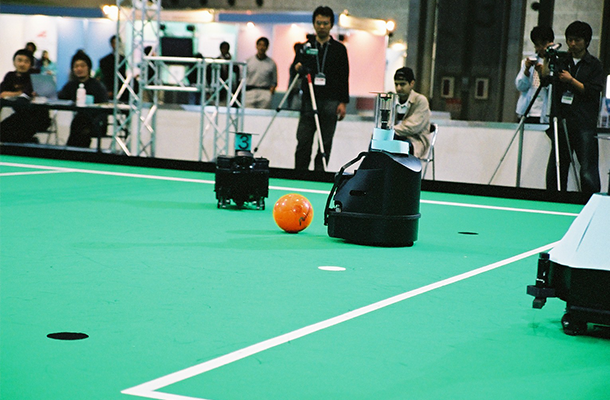 |
| 2005 | First KEITA service robot completed | 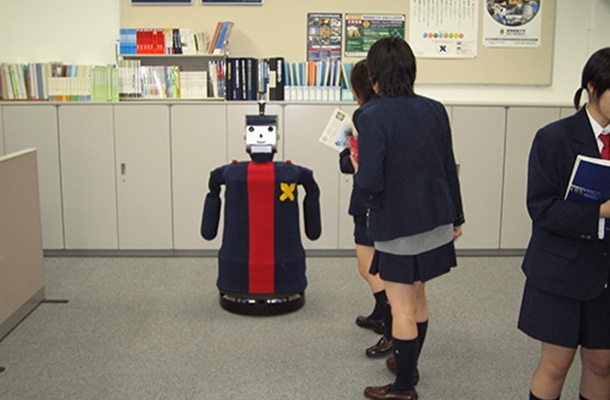 |
| 2006 | Development of the MKR-003 Omnidirectional Autonomous Transport Robot | 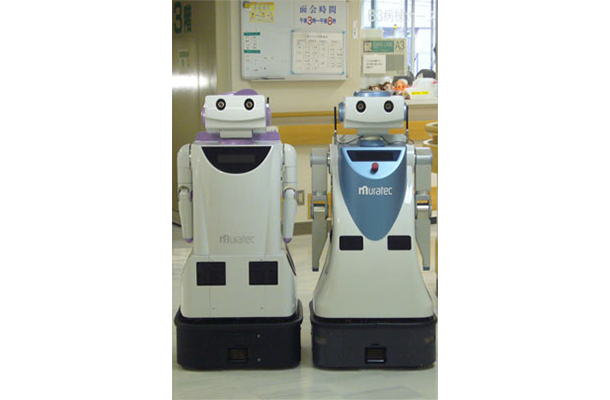 |
| 2008 | Wheelchair Collision Avoidance Experiment | 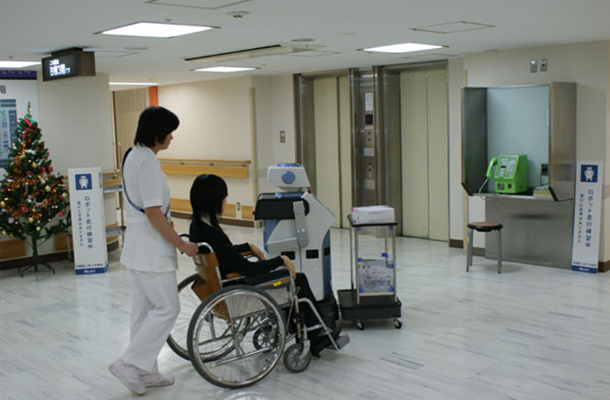 |
| 2011 | In-Hospital Driving Test | 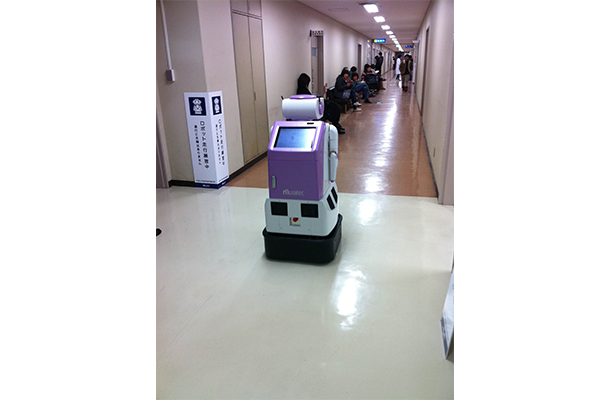 |
| 2014 | Autonomous Robot Floor Scrubber | 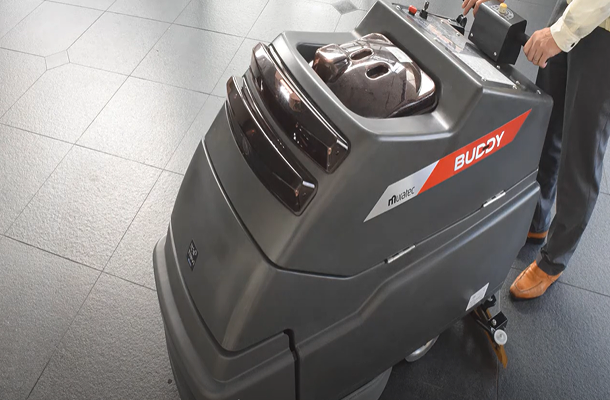 |
| 2015 | Information Guide Robot | 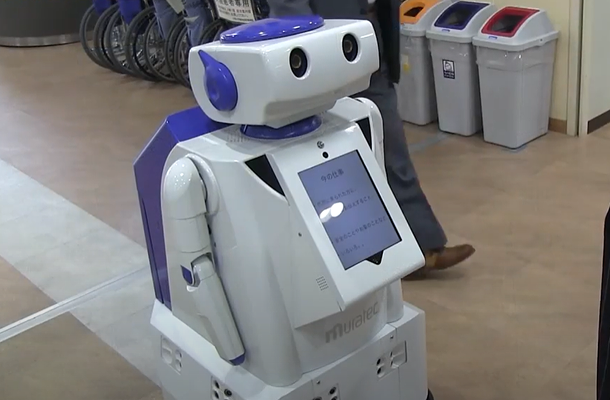 |
| 2016 | Room Service Robot | 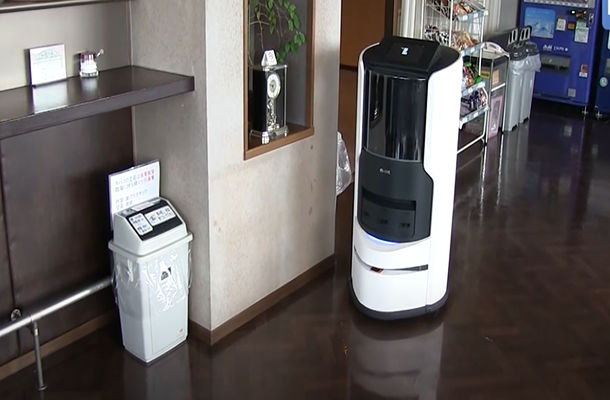 |
| 2016 | Automatic Medication Tray Transport System for Hospitals | 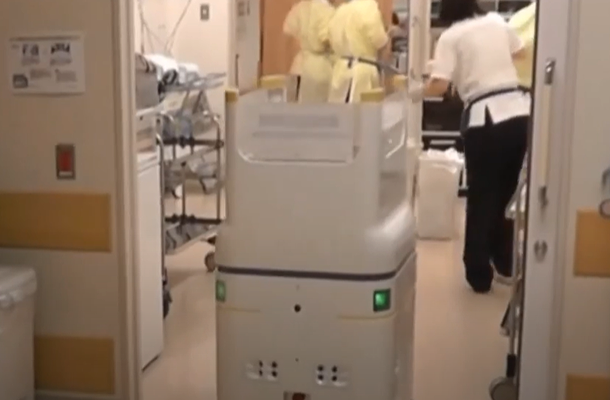 |
| 2017 | Room Service Robot | 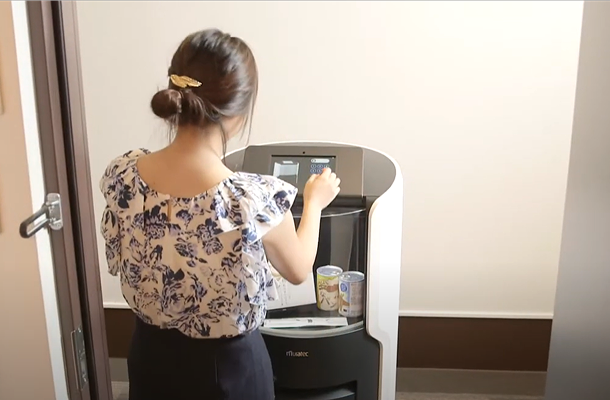 |
| 2021 | Autonomous Ball-Collecting Robot for Golf Driving Ranges | 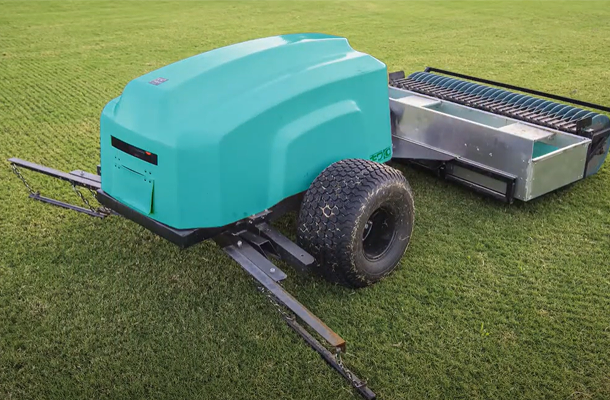 |